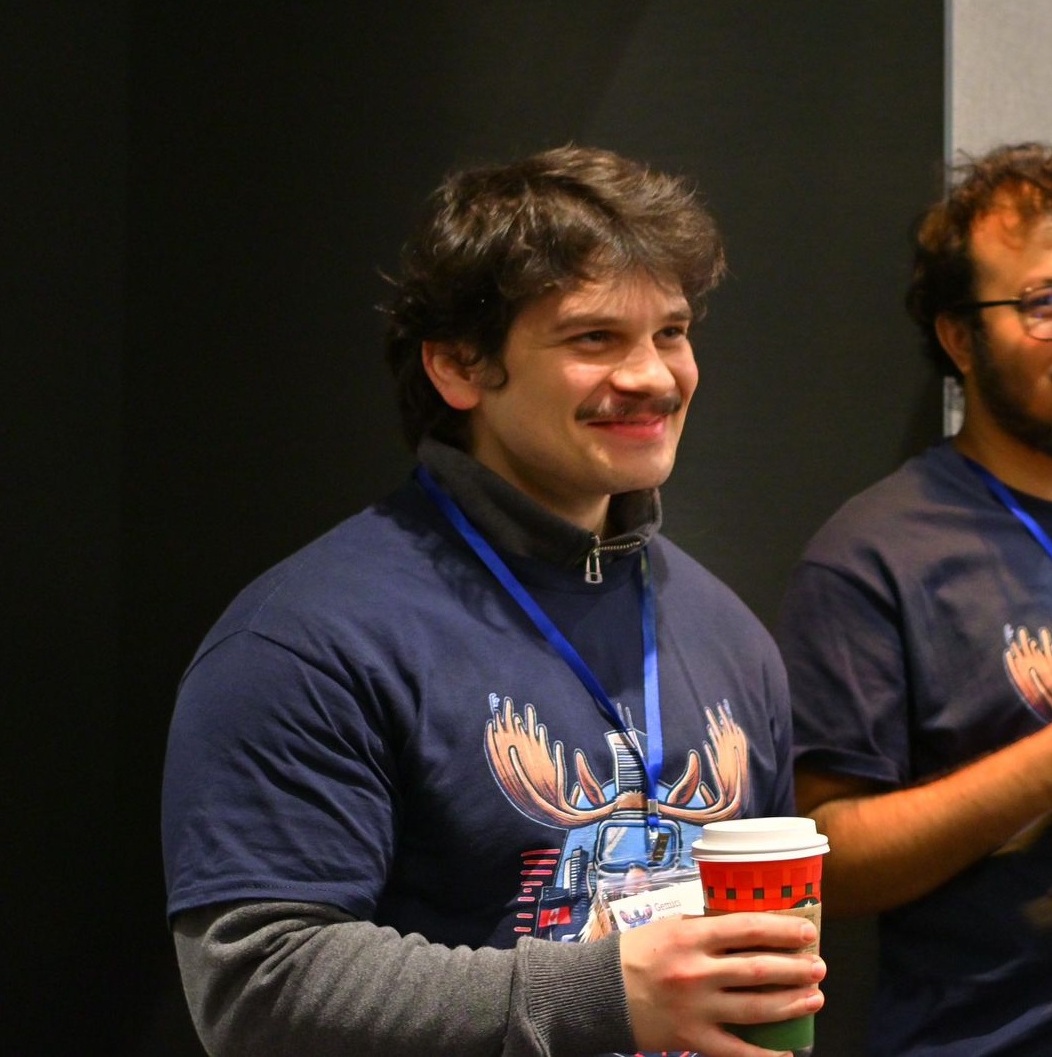
About Me
I studied Electrical & Electronics Engineering at Kadir Has University, graduating in 2022 as the top-ranking student across all departments and faculties with a 3.94/4.00 GPA. My graduation project was MuscleNET, a wearable device built with Arduino and MyoWare sensors that reads muscle activity and predicts training quality, which received the Best Graduation Project Award. During an internship around the same time, I built a set of brain-computer interface games on the NextMind SDK, one of which was exhibited at Teknofest 2021 and featured on NextMind's official blog.
After graduating I joined Servo Studios as a mobile game developer, where I spent a year shipping five titles and handling everything from core mechanics and UI to performance on low-end phones. It taught me interactive software development tools and a user-friendly approach to design, both of which carried directly into my research.
I started my Ph.D. in Computer Science at Concordia University in January 2024, under the supervision of Dr. Anil Ufuk Batmaz, working in Human-Computer Interaction and Extended Reality. My early work there dealt with two obstacles that make spatial input hard to rely on. The first is precision: I built a manipulation method that uses a signed distance field to slow a distant object as it nears other surfaces, so it can be placed accurately without slowing the user down. The second is reliability, in a Google-funded project on hand tracking, where I developed an early-warning system that predicts tracking failures and alerts users before they happen, then used eye tracking to check that the warnings do not pull attention away from the task.
Most of my recent work is on cross-reality systems for productivity workflows: how people work across desktop and immersive environments, and what it costs them to move between the two. In MAR I paired desktop 3D modeling in Blender with an immersive AR view for spatial inspection and gesture-based selection. In a following study I built an AR second screen for LLM-assisted authoring and measured what users actually pay to cross between the physical and virtual sides of that workflow. Every system I build for these studies is interactive software, so the game development still does most of the heavy lifting, and I teach some of it back as a teaching assistant for the game development courses at Concordia.
I am currently a visiting researcher at the Nara Institute of Science and Technology (NAIST) in Japan, in the Cybernetics and Reality Engineering Laboratory of Prof. Kiyoshi Kiyokawa, supported by a Mitacs Global Research Internship Award, where I am developing a smart glasses assistance system for daily use.
Outside of the lab, I am a disciplined bodybuilder. The consistency and dedication required for the sport directly translate to my work ethic in facing long-term research challenges.